The idea that a wrinkle-smoothing injection might help lift mood started as a curiosity on a dermatology floor. Patients who received Botox for frown lines often returned saying they felt lighter, less stuck in negative thoughts. Those anecdotes nudged researchers to study the connection, and over the past fifteen years a reasonably coherent picture has emerged. The evidence is not perfect, and Botox is not a replacement for psychotherapy or antidepressants, but there is substance here. If you’re weighing a botox appointment for cosmetic reasons and happen to struggle with low mood, you might want to understand this evolving science before you book.
How a toxin for muscles became a candidate for mood
Botulinum toxin type A, commonly known as Botox, shuts down communication between nerves and the muscles they serve. In cosmetics we use tiny doses to relax hyperactive facial muscles. That softens lines formed by frequent movements, most visibly the glabellar complex between the eyebrows where frown lines sit. Many people first meet botox for forehead lines, crow’s feet, or frown lines, and the goal is simple: reduce muscle contraction, soften the crease, maintain natural expression.
Psychiatry took interest because emotion is not just in the brain, it is also in the body. The facial feedback hypothesis suggests that the expressions we make feed back to shape the emotions we feel. Clench your jaw long enough and your whole body seems to gird for conflict. Knit your brows and your mind reads the scowl as a cue that something is wrong. By reducing the habitual scowl at the glabella, botox might dampen a constant trickle of negative feedback. That is the working hypothesis behind botox therapy for depression.
The second reason to look seriously at botox treatment for mood is timing. Traditional antidepressants often require weeks to work and can bring side effects like weight gain or sexual dysfunction. If botox softens depressive symptoms and does so quickly, even for a subset of patients, it becomes an attractive adjunct. Add to that the relatively favorable safety profile when used by a trained injector, and you have Livonia botox treatments a plausible tool, not a miracle.
What the studies actually show
Early research focused on a small target: people with major depressive disorder and visible glabellar frown activity. Randomized controlled trials injected botox into the glabellar region for one group and saline placebo for another, then measured mood over several weeks. Several of these trials, typically with tens to low hundreds of participants, reported that the botox group improved more than placebo after 2 to 6 weeks, sometimes with remission rates roughly double the comparison arm. Effect sizes varied, and not every study was positive, but the signal was strong enough to sustain interest.
When you back up and look at pooled analyses, you still see benefit, especially in people who have prominent frown lines or who respond to placebo less robustly. The effect seems to emerge around week two and may last through the active period of the toxin, usually 8 to 12 weeks. Some studies included people with treatment-resistant depression, where anything with even moderate odds of success matters. These trials aren’t enormous, though, and they often recruit from specialty clinics. That limits their generalizability.
There are caveats. Most trials target the glabella, not the entire face, so botox for forehead lines or crow’s feet is not the same protocol. A few studies using other injection patterns have reported mixed results. We don’t yet know whether men and women respond equally or whether age, chronicity, or comorbid anxiety shifts outcomes. Real-world registry data are only starting to accumulate, and we need head-to-head comparisons with established therapies. Still, the latest research is converging on a consistent observation: for a proportion of patients with major depressive disorder, a single session of glabellar botox injections reduces symptom severity for about 2 to 3 months.
Mechanisms: more than vanity, less than magic
The simplest explanation involves facial feedback. The glabellar complex is closely tied to expressions of anger, worry, and distress. If you prevent that repeated movement, you reduce the bodily cues that maintain negative affect. Functional imaging studies add texture. A few small experiments found that botox at the glabella changes amygdala reactivity to negative stimuli. Participants after botox showed reduced activation in regions implicated in threat processing. Does that prove causation for mood improvement? Not quite, but it is biologically plausible.
There is also a social feedback angle. When your resting face looks less severe, the world reflects something different back to you. Fewer “are you upset?” comments at work, more relaxed micro-interactions at the coffee counter. For a person who is already depressed, those tiny daily nudges can accumulate. A patient once told me, half joking, that the week after her glabellar injection was the first time her partner didn’t ask “What’s wrong?” at dinner. That change didn’t cure her depression, but it removed a small but constant friction from her evenings.
A third possibility is that botox engages sensory-afferent pathways that alter central processing independently of expression. Faces are dense with proprioceptive and nociceptive inputs. You can think of botox as a peripheral modifier that, by quieting certain feedback loops, allows limbic circuits to reset. This is still speculative, but it is consistent with the speed of response some people describe.
Where botox fits among other treatments
No one is arguing that botox replaces standard-of-care therapies. If you are acutely suicidal or severely impaired, you need evidence-based psychiatric care first. Botulinum toxin can play a supportive role. For patients who do not tolerate medications, dislike systemic side effects, or want to avoid daily dosing, an injection every three months can be appealing. For those already in psychotherapy, botox can create a window where the cognitive work is easier because ruminative cues are dampened.
Botox for depression is off-label in most regions, which means it is a medical botox use not specifically approved by regulators for that indication. Off-label use is common in medicine, but it requires candid counseling about the evidence and alternatives. Many clinics that provide botox services for cosmetic needs now field questions about mood. The right response is not a quick yes. It is a careful evaluation, ideally with collaboration between a botox doctor skilled in facial anatomy and a mental health professional who can track outcomes.
Practical details: dosing, placement, and what to expect
In the depression studies, the intervention is usually limited to the glabellar region: corrugator supercilii and procerus. Typical total doses range from 20 to 40 units, though exact numbers depend on the formulation, muscle mass, and sex. A conservative start makes sense. You can always adjust at a follow-up.
The appointment itself feels much like a cosmetic botox session. A detailed evaluation maps your frown pattern and eyebrow position. The botox procedure involves several quick injections with a fine needle. The visit often takes less than 20 minutes. Most people return to work the same day. Early botox effects for muscle relaxation show within 3 to 7 days, with full effect at two weeks. For mood, the best studies show a lag of roughly the same window.
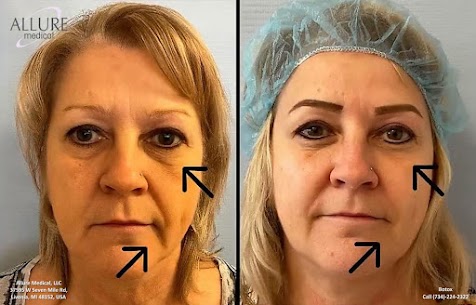
Before-and-after experiences vary. Some patients report a subtle easing of the internal scowl, as if the volume on self-criticism drops. Others feel no mood change but appreciate softer lines. A few feel “too relaxed” in the upper face, especially if dosing is heavy or if the brow sits low to begin with. The art is to relax the negative expression without flattening all movement. That is why you should seek licensed botox professionals who respect both aesthetics and function.
Safety, side effects, and trade-offs
Botox side effects in the glabellar area are well known. Bruising at injection sites is common but fades within days. Headache may occur around onset. Temporary eyelid or brow droop is the complication everyone worries about, usually caused by diffusion to the levator palpebrae or poor injection technique. When it happens, it is temporary, generally resolving within 2 to 6 weeks, but it can be distressing. Dry eyes, asymmetry, or a heavy-feeling forehead are less serious but worth mentioning.
" width="560" height="315" frameborder="0" allowfullscreen="" >
From a psychiatric standpoint, the main concern is masking important emotional signals, especially in people who rely on facial expressiveness for communication. Therapists sometimes note that if a patient cannot frown, it becomes harder to access certain feelings in-session. Others find the opposite, that relief from the perpetual scowl creates space to engage. There is no universal rule; it depends on the person and the dose.
Systemic adverse events are rare at cosmetic doses. Botox is a temporary, non-surgical treatment. Its effects wear off in about three months, sometimes a little longer for the glabella. That impermanence is both a benefit and a drawback. If you like the results, you need maintenance. If you don’t, you’re not stuck indefinitely.
Who might benefit, who should think twice
Emerging profiles suggest better odds of response in people with:
- Prominent glabellar muscle activity, especially if frowning is habitual and linked to ruminative thought patterns Mild to moderate major depressive disorder without psychotic features, where other treatments are tolerated but insufficient Sensitivity to systemic medication side effects and openness to adjunctive, non-invasive options
On the other hand, candidates who should pause include those with very heavy brows, pre-existing eyelid ptosis, or neuromuscular disorders. Individuals with body dysmorphic disorder may pursue botox for the wrong reasons, and in those cases, depression rarely improves with cosmetic change. Pregnancy and breastfeeding remain caution zones given limited safety data. If you have atypical depression marked by leaden paralysis or hypersomnia, the facial feedback pathway may play a smaller role in your symptom set.
Cost, access, and the “botox near me” problem
Because botox for depression is off-label, insurance coverage is uncommon. Expect out-of-pocket costs similar to cosmetic glabellar treatments. In many US markets, the botox injection cost for this area ranges from 200 to 500 dollars depending on the clinic, injector experience, and local botox pricing. Package deals, botox specials, and botox promotion advertising can be helpful for your wallet, but prioritize skill over discounts. Cheap botox can quickly become expensive if you need a corrective visit elsewhere.
If you search “botox clinic” or “botox injections near me,” you’ll get a long list of options. Not all are equal. A trusted botox expert earns that title through training and outcomes, not by offering the lowest rates or the fastest botox booking. For mood-related goals, ask whether the provider has experience with glabellar dosing linked to depressive symptoms and whether they coordinate with your mental health team. A brief botox consultation should cover your mood history, current treatments, and realistic expectations, not only the aesthetic plan.
How this intersects with other medical uses
Botox is already an established medical botox treatment for chronic migraine, hyperhidrosis, cervical dystonia, spasticity, and TMJ-related bruxism. If you have migraines or jaw tension, your neurologist or dentist might already be using botox as part of your plan. Interestingly, some patients treated for migraines describe mood improvements independent of headache relief, which supports a broader central effect. That said, depression-focused injection patterns are more conservative and targeted than migraine protocols. Do not assume that broader forehead injections or masseter treatments for a sharp jawline will confer the same mood benefit.
Setting expectations: results and follow-up
Most people feel the maximum muscle effect at two weeks and then a gradual return of movement around 10 to 14 weeks. If you respond on mood, expect a similar arc. The botox results are temporary. If botox benefits you emotionally, plan for maintenance sessions 3 to 4 times per year. For some, spreading to 16 weeks works fine; others notice breakthrough symptoms at 10 weeks.
Your first follow-up is ideally at two weeks. That visit is not for a big top-up unless asymmetry exists, but rather to check eyebrow position, function, and early mood signals. A second check-in at six to eight weeks can guide future dosing. If there is no mood improvement by that point, I generally recommend stopping. Chasing a non-response with higher doses increases the risk of a heavy brow without unlocking benefit.
How a session actually looks in clinic
A new patient for botox therapy arrives with a simple goal: “I’m tired of feeling trapped in a scowl.” We begin with a brief mood screen, medication list, and a look at the brow. Some brows sit low at baseline, especially in men with thick corrugators. That shape matters. We take a few photos for botox before and after comparisons and mark injection points based on how the muscles fire. For the glabella, I favor small aliquots across five points, adjusting for asymmetry. Less product laterally if the brow tends to pull down, slightly higher points to avoid diffusion.
Injections are quick. I warn about the peculiar sting above the nose and the possibility of a pressure headache that evening. Aftercare is straightforward: no heavy exercise for a few hours, avoid rubbing the area, keep your head upright for a short window. Most people are comfortable returning to daily life immediately.
Two weeks later, we meet again. I want to know about subtle shifts: whether ruminations felt less sticky, whether mornings felt less laden, whether anyone noticed a difference. If they did, we talk about how to use that window to lean into therapy or behavioral activation. If they didn’t but they’re pleased with the softened lines, we can continue for cosmetic reasons and consider mood a neutral outcome.
The intersection with broader aesthetic goals
If you are already pursuing cosmetic botox for face rejuvenation, it is worth aligning strategies. Forehead lines and crow’s feet treatments can be combined with glabellar work, but be careful. Over-relaxing the frontalis can exacerbate the sensation of heaviness, especially if the glabella is also tight. For people interested in botox for jawline contouring or TMJ relief, the masseter injections are anatomically separate and do not typically influence mood pathways. When planning full-face sequences, talk about priorities: a natural look, preserved expression, and functional comfort come first. That approach tends to produce the best botox results and the highest satisfaction in botox reviews.
What this means for men and women across ages
Depression does not discriminate, and neither does facial feedback. Women tend to seek botox earlier and may come in for preventative botox in their late twenties or thirties. Men usually start later and often have stronger glabellar muscles that require modestly higher dosing. In both groups, the objective is the same: ease the hyperactive frown without creating a frozen look. People in their fifties and sixties can benefit just as much, though deeper etched lines do not vanish with muscle relaxation alone. In those cases, combining botox with skin care or resurfacing may help the aesthetic side, while the mood effect, if it appears, still comes from reduced negative feedback.
Common questions patients ask
Is this just Livonia botox placebo? Placebo plays a role in all mood treatments. The stronger trials used blinded, saline-controlled designs and still found botox effects that exceeded placebo. That said, your personal experience is what matters. If you feel better and function improves without harm, it is worth considering as part of your plan.
Will I still be able to express myself? Yes, with careful dosing. The goal is not to erase expression, but to soften the reflexive scowl. I encourage patients to keep forehead and periocular movement when possible and to avoid heavy-handed dosing that flattens the upper face.
What if I also want botox for wrinkles elsewhere? That is fine. Combining glabellar treatment with crow’s feet or forehead lines is common. Make sure your injector sequences and doses with both function and mood in mind.
How much does it cost? For glabellar-only treatment, expect a few hundred dollars per session in most markets. If a clinic advertises “buy botox online” or offers remarkably low prices, proceed with caution. You want licensed botox professionals using genuine product, not gray-market supplies.
Can I schedule botox appointments online? Many clinics offer easy online booking. Still, the first visit should include a proper assessment. If depression is a goal, ask for time to discuss it explicitly.
Where the research is headed
Two questions are driving current studies. First, who responds? Biomarkers could include baseline frown electromyography, specific depressive subtypes, or neuroimaging patterns. If we can identify likely responders, we can spare others from trial-and-error. Second, how durable is the benefit over repeated cycles? Some patients describe cumulative ease over a year of periodic treatments, while others notice diminishing returns. Longer trials are needed.
There is exploratory work in other facial areas, but the glabella remains the most plausible target given its role in negative affect. Combining botox with therapy and measuring synergy is another important step. Imagine a brief course where the injection reduces reflexive negativity while cognitive behavioral therapy retrains thinking, then taper the botox as skills consolidate. That integrated model fits how many of us already practice.
Thoughtful next steps if you are curious
If you are considering botox for depression, start with your mental health provider. Bring the idea forward as one option among many, not a last hope. Collect a simple baseline using a tool like the PHQ-9, then reassess after two and six weeks. If you’re already seeing a clinic for cosmetic work, ask whether they coordinate with your therapist or psychiatrist. A clear treatment plan beats a scattered approach.
Finally, hold your outcome loosely. Some people feel a noticeable lift, others do not. That unpredictability is the honest state of botox therapy today. The best candidates approach it as a temporary, safe adjunct within a broader recovery plan. In that context, the latest research offers cautious optimism: a small set of injections, placed with care, may help loosen depression’s grip while you do the deeper work of getting well.